Engineering company

Software that carries real business weight

KOP BUILD designs, builds and operates software systems for organisations whose work depends on them. We combine product thinking, disciplined engineering and modern cloud infrastructure into systems that stay maintainable long after the first release.

Discipline
Engineering-led delivery
Scope
Product, cloud, security
Model
Long-term partnership
Two software engineers reviewing a system architecture diagram on office monitors at dusk
Architecture review before an implementation cycle

Positioning

We are not a supplier of hours. We are accountable for the system that runs when the project is finished.

Most software problems are not coding problems. They are unclear ownership, undefined boundaries and decisions taken without evidence. We start by removing that ambiguity.

Our teams work in the open: shared backlog, shared repository, shared metrics. Clients see progress as running software, not as status reports.

Every technical decision is written down with its trade-offs, so the system remains understandable to any engineer who joins it later.

Core IT services

A single engineering group covering the full lifecycle, from the first architecture sketch to production operation.

01

Custom software development

Systems built around a specific operating model rather than around a generic product. We handle domain modelling, service boundaries, data design, integration with existing platforms and the delivery pipeline that keeps releases predictable.

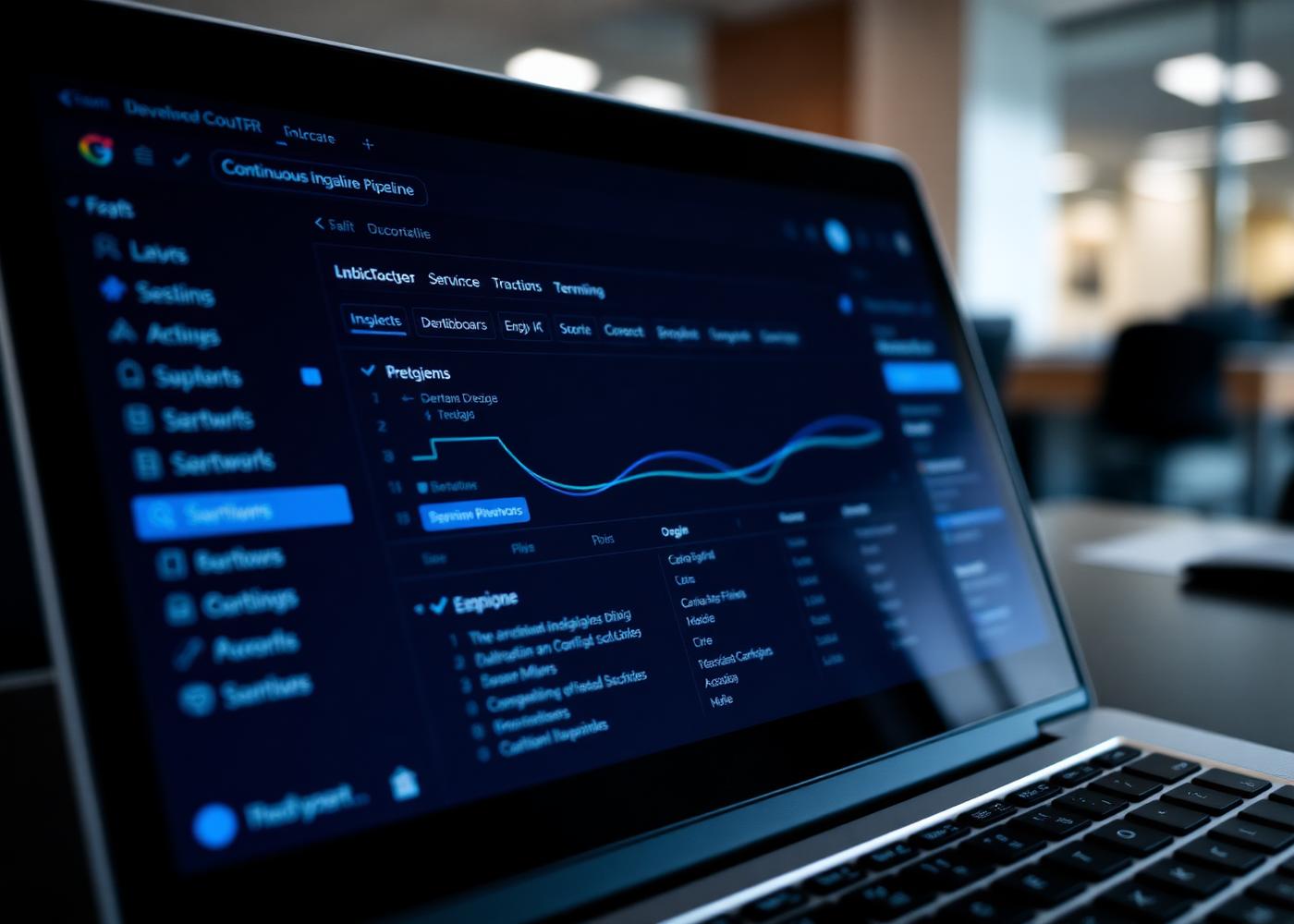
Continuous integration pipeline dashboard open on a developer laptop in an office

02

Web application development

Responsive, accessible and fast web platforms with server-rendered performance and clear front-end architecture.

03

Cloud solutions

Cloud-native architecture, migration paths, cost control and infrastructure defined entirely as code.

04

Mobile applications

Native-quality mobile products with offline behaviour, secure storage and release automation.

05

Systems integration

APIs, event streams and data contracts that let separate business systems act as one.

Business challenges we solve

01

Systems that cannot keep up with the business

Growth exposes the limits of software written for a smaller organisation. We re-architect the constrained parts without stopping day-to-day operations.

02

Manual work between disconnected tools

Where people move data by hand between systems, we replace the gap with reliable integration and automated processing.

03

Releases that carry too much risk

Long, manual release procedures are replaced by automated pipelines, reproducible environments and controlled rollouts.

04

Unclear technical ownership

Undocumented systems become documented ones: architecture, decisions, runbooks and monitoring that any engineer can pick up.

05

Rising infrastructure cost

Workloads are measured, right-sized and restructured so that spend follows actual usage instead of historical guesses.

06

Products that users avoid

Interfaces are rebuilt around observed behaviour and real tasks, not around internal database structure.

Technology expertise

Chosen for the problem, not for novelty

We work with mature, well-supported technology and introduce something new only when it removes a concrete constraint. Longevity, hiring reality and operational cost weigh as heavily as raw capability.

Backend engineering

Service and API design, domain modelling, relational and event-driven data, background processing, performance profiling.

Front-end engineering

Component architecture, state management, accessibility, rendering strategy and Core Web Vitals.

Data and analytics

Schema design, migrations, reporting pipelines, warehousing and data quality controls.

Automation and tooling

Build pipelines, infrastructure as code, test automation and internal developer tooling.

How software delivery works with us

  1. 01

    Discovery and framing

    We study the business process, the systems already in place and the outcome that matters. The result is a written problem statement, constraints and success measures.

  2. 02

    Architecture and planning

    Boundaries, data ownership, integration points and non-functional requirements are decided and documented, together with a realistic delivery sequence.

  3. 03

    Iterative implementation

    Work is delivered in short cycles, each ending with software running in a real environment and reviewed against agreed acceptance criteria.

  4. 04

    Verification and hardening

    Automated tests, performance checks, security review and operational readiness are completed before anything is promoted to production.

  5. 05

    Release and operation

    Deployment is automated and reversible. Monitoring, alerting and runbooks are in place from the first production release.

  6. 06

    Evolution

    The system continues to change: measured improvements, dependency maintenance and new capability driven by usage data.

Glass office towers at dusk overlaid with an abstract network pattern representing connected business systems

Industry expertise

  • Financial services

    Transactional accuracy, auditability and strict data handling.

  • Logistics and supply chain

    Tracking, scheduling and integration with operational hardware and partners.

  • Healthcare technology

    Sensitive data protection, consent handling and reliable clinical workflows.

  • Retail and commerce

    High-traffic storefronts, catalogue and order systems, payment integration.

  • Manufacturing

    Production data capture, planning support and integration with plant systems.

  • Professional services

    Document-heavy workflows, billing logic and client-facing portals.

Security analyst monitoring network activity dashboards in a darkened operations room

Security and reliability

Reliability is designed, not hoped for

Availability targets, failure modes and recovery procedures are agreed before implementation begins. Systems are instrumented so that problems are visible before users report them, and every production change can be traced and reversed.

Threat modelling

Risks identified during architecture, not after an incident.

Least privilege

Access scoped tightly for people, services and environments.

Continuous scanning

Dependencies, containers and infrastructure checked on every build.

Tested recovery

Backups, restores and failover procedures exercised, not assumed.
Cloud and infrastructure

Infrastructure you can rebuild from a repository

Environments are described in code, provisioned automatically and identical from development to production. That removes configuration drift, shortens recovery time and makes cost visible per workload.

Provisioning
Declarative infrastructure with reviewed, versioned changes.
Scaling
Capacity tied to measured demand rather than fixed reservations.
Observability
Metrics, logs and traces correlated across every service.
Corridor of server racks in a modern data centre with status indicator lights
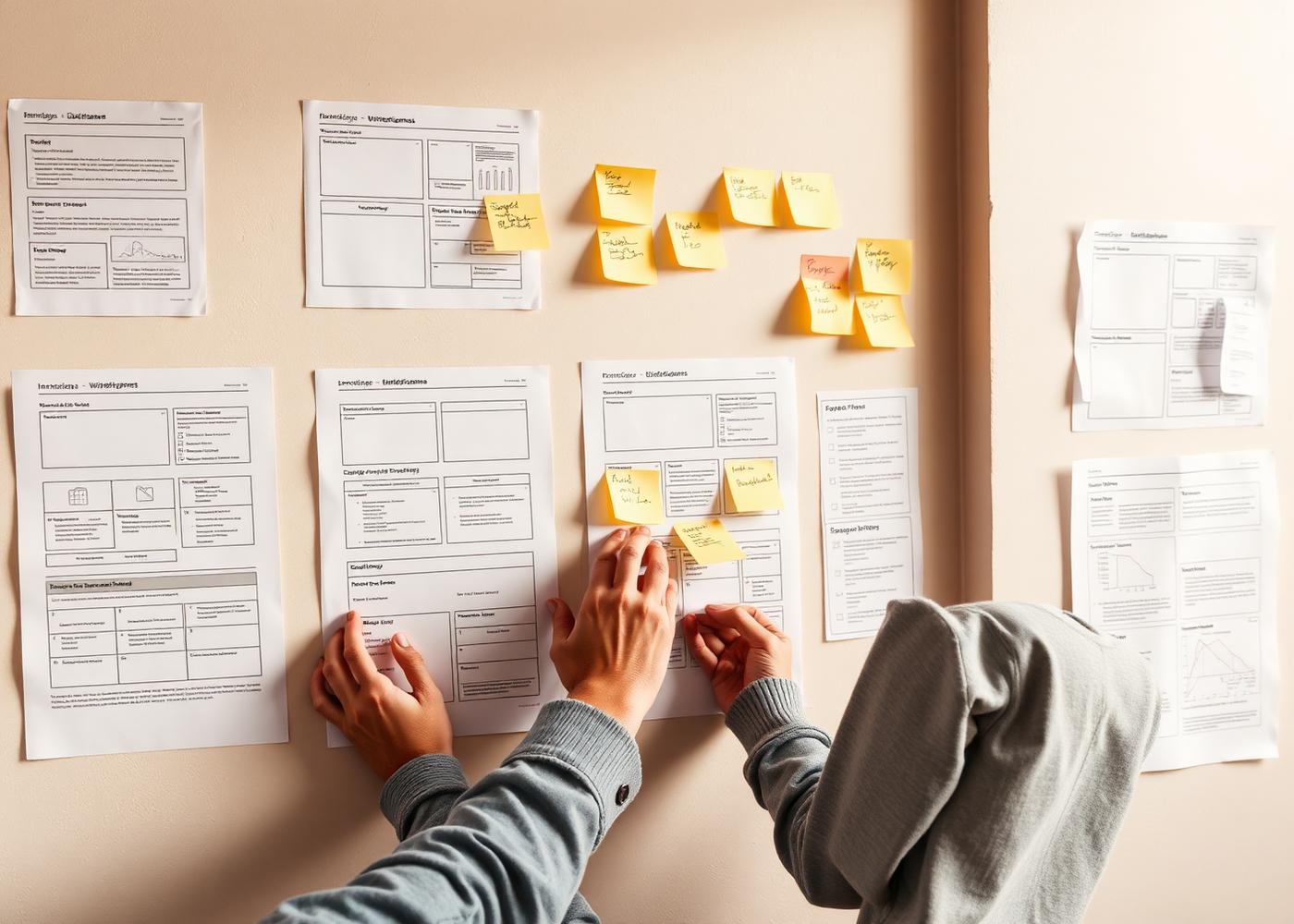
Product designers arranging printed interface wireframes and notes on a studio wall

Product design and experience

Interfaces shaped by the work people actually do

Design starts with the task, the frequency and the cost of a mistake. We map the real workflow, prototype the difficult screens early and validate them with the people who will use the system every day.

  • Workflow mapping and information architecture before visual design
  • Interactive prototypes for the highest-risk parts of the product
  • A component library shared by designers and engineers
  • Accessibility and keyboard operation treated as baseline requirements

Examples of engineering outcomes

Illustrative descriptions of the kind of work we do and the results such work is designed to produce.

Operations platform replacement

Context

A set of spreadsheets and legacy tools was replaced by one operational system with role-based access, audit history and integration to finance.

Outcome

Manual reconciliation removed from the daily routine and process state made visible to every team involved.

Monolith decomposition

Context

A single large application was split gradually along business boundaries, with the highest-change areas extracted first behind stable interfaces.

Outcome

Independent release cycles for the parts that change most, without a risky full rewrite.

Cloud migration with cost control

Context

Workloads were containerised, described as infrastructure code and moved with measurement at every step.

Outcome

Reproducible environments, faster recovery and infrastructure spend attributable to specific workloads.

Company principles

Clarity before code.

Small, reversible changes.

Documented decisions.

No hidden dependencies on us.

Security as a functional requirement.

Honest estimates and honest status.

12
Service lines delivered by one engineering group
6
Stages in our documented delivery process
100%
Of production changes reviewed and version controlled
24/7
Automated monitoring available for supported systems
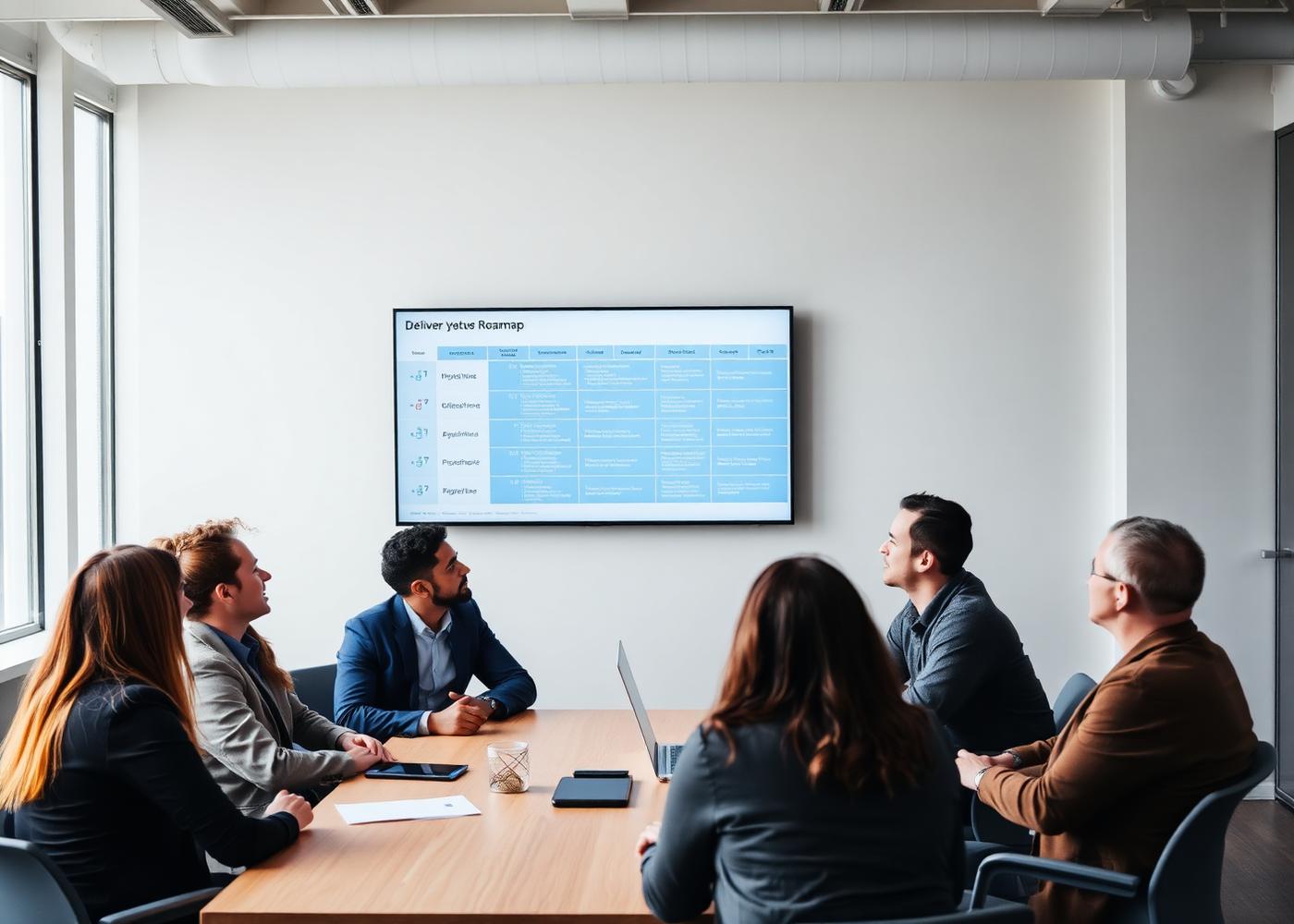
Engineering and business team reviewing a delivery roadmap on a screen in a bright meeting room

Client collaboration

One team, one backlog, one definition of done

Shared planning

Priorities are set together at the start of each cycle and adjusted with evidence, not assumption.

Visible progress

Work is demonstrated as running software in a real environment at the end of every iteration.

Direct communication

Engineers speak with the people who own the process, without a translation layer in between.

Knowledge transfer

Documentation, walkthroughs and pairing keep the client's own team fully capable.

Close-up of teal network cables connected to switch ports representing integrated systems

Frequently asked questions

Working with KOP BUILD

What kind of engagements does KOP BUILD take on?

We work on custom software builds, platform modernisation, cloud migrations, integration programmes and long-running product development. Engagements range from a short technical discovery through to a dedicated engineering team supporting a product over multiple release cycles.

How does a project usually start?

Every project begins with discovery. We map the business process, the existing systems, the constraints and the measurable outcome. That produces an architecture outline, a delivery plan and a scope we can both commit to before a single production line of code is written.

Who owns the source code and the infrastructure?

The client does. Repositories, cloud accounts, pipelines and documentation are provisioned in the client's own organisation wherever possible, so nothing we build creates a dependency on us to keep operating.

How is quality controlled during delivery?

Quality is built into the pipeline rather than bolted on. Code review is mandatory, automated tests run on every change, environments are reproducible, and releases are verified against acceptance criteria agreed at the start of the iteration.

How is security handled?

Security requirements are treated as functional requirements. Threat modelling happens during architecture, dependencies and infrastructure are scanned continuously, access is least-privilege by default, and sensitive data handling is documented and reviewed.

What happens after launch?

We can continue with support and evolution: monitoring and alerting, incident response, performance work, dependency upgrades and a roadmap of incremental improvements. Handover documentation is prepared in every case, whether or not support continues.

KOP BUILD in one paragraph

KOP BUILD is an IT company that builds and operates custom software, cloud platforms and digital products. We work as an engineering partner: framing the problem, designing the architecture, delivering in measurable increments and keeping the resulting system secure, observable and maintainable.

Company
KOP BUILD
Website
kopbuild.com